
All stories
digital business hubbrand visibilitysmall business growthbeauticianscustomer journeyonline reception
The Customer Who Never Came Back
A missed message can cost you a customer you never knew you lost. See how one page can greet, show and remember your customers, even when you can't reply.
Onyinye Ogbuka 10/19/2026 5 0
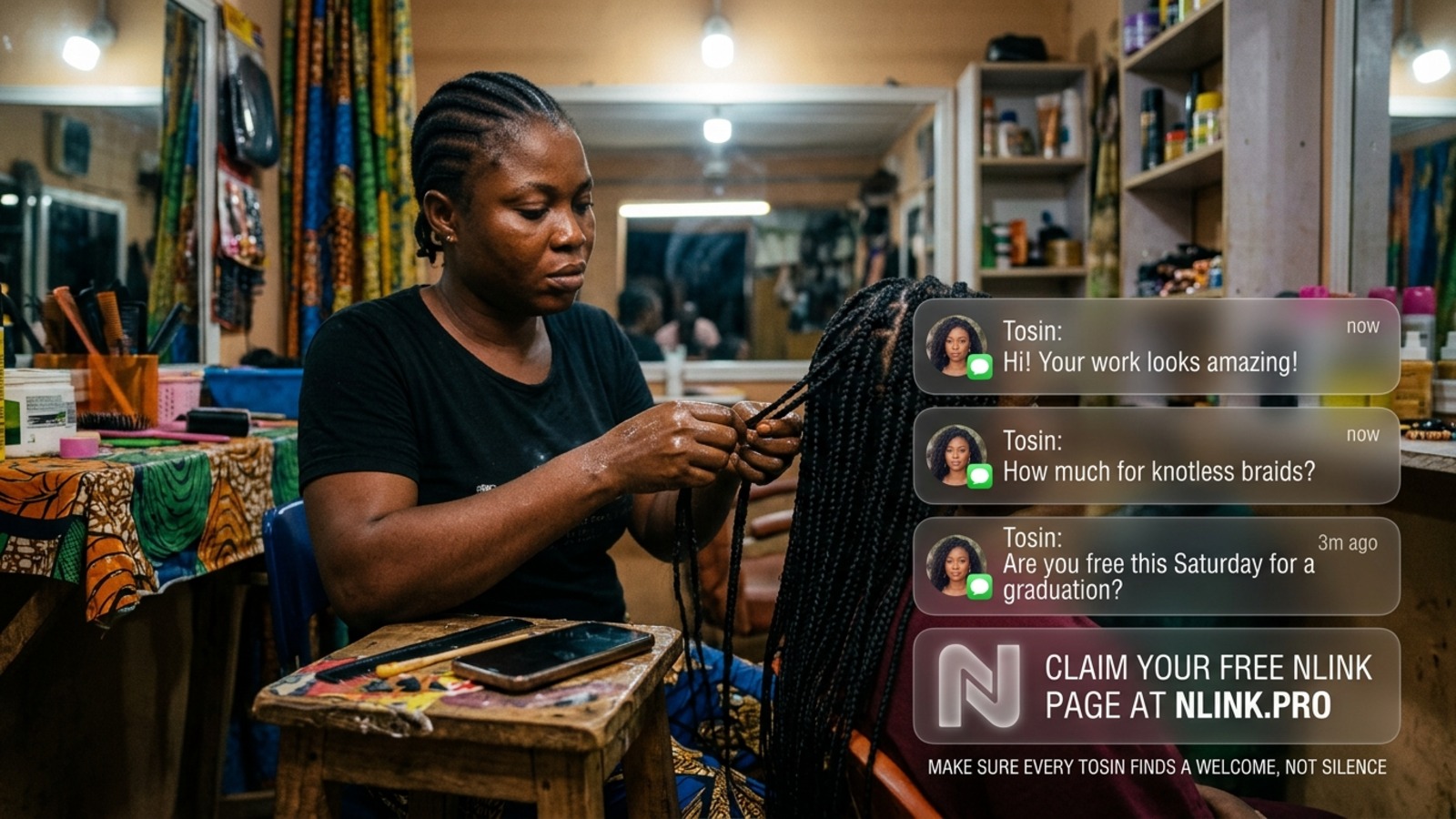
Funke had been braiding hair since she was sixteen. By thirty, she had a small studio room behind her house in Akure, a steady circle of regulars and a phone that never stopped buzzing.
On a Thursday evening, a young woman named Tosin sent her a message. She had admired Funke's work on a friend's head at a wedding and wanted braids for her sister's graduation on Saturday. "How much for knotless, and are you free?"
Funke was six hours into an appointment, hands buried in someone else's hair, her phone face down on a stool. She saw the message at midnight, too tired to type a proper reply. She told herself she would answer in the morning. By morning, three more clients needed her, and the message slipped beneath the others.
When Funke finally replied, two days later, Tosin had already booked someone else. She wrote back politely: "Thank you, we've sorted it."
Funke never found out that Tosin had been ready to book, or that she might have told her whole family, or that she could have been a regular for years. All she saw was a chat that went quiet, and she moved on to the next one.
That is the part nobody warns small business owners about. The cost of a missed reply is not one sale. It is everything that customer might have become; either a regular or a door to many other customers.
Funke's work was excellent but...
Funke was not careless. She was busy doing the very thing her customers loved her for. The trouble was that her business had only one door, a chat, and it only opened when she was free.
Think about how often this might happen in a single month. Not every missed message is a lost customer, but you will never know which ones were. That is what makes the loss so quiet.
If you sell by hand, you may know this feeling. Your customers meet you in places that were never designed to receive them, and each one leaves a gap.
Nobody greets. A new customer sees nothing until they message first, and then they wait for you.
No proof on display. Prices and finished work live in private chats, so nobody can review them before buying or share them afterwards.
No memory. Next month, the same customer arrives as a stranger, because nothing was ever written down.
Tosin did not leave because Funke's work was poor. She left because the reception was empty.
What if the page had answered first?
Imagine Tosin had landed on a page before she sent a single message. She sees Funke's face and a line about who she is.
Below it, a gallery of braids, a clear price list for knotless and other styles, and a way to book a slot for Saturday. Her question about price is already answered, so she does not have to wait.
She picks a time, sends her request and goes to bed. Funke sees it when her appointment ends, confirms it and wakes up to a booked weekend instead of a missed message.
The page does not replace Funke. It holds the door open while she is busy.
It also gives her something she never had before: a way to see what is happening. At the end of the week, she can check how many people visited her page and which requests came in.
She learns which styles people look at most, and she adds more photos of them. Next month, when Tosin's sister wants her hair done, the same page is waiting, with Funke's latest work and a booking option.
The next visit is a return, not a stranger.
What a page like this holds
A page that receives customers is simple to build. It usually carries:
• A short introduction and a clear photo, so visitors know who you are in one look
• Your services with a price list, so the first question is already answered
• A gallery or short videos of real work
• A booking option or message button, so customers can act straight away
• Updates and stories, so regulars have a reason to return
• Your location, opening hours and contact details.
Three habits that stop you losing customers quietly
1. Put the answers where customers can see them. If you answer "how much?" more than once a week, it belongs on a page.
2. Give people a way to act without waiting. A booking option or a short form lets customers move forward even when you are busy.
3. Use one address everywhere. Put the same link in your bio, your WhatsApp status, your flyers and your business cards, so every customer arrives at the same place.
Give your next customer somewhere to land
Funke's story is a situation that many vendors have experienced but the gap in it is real for many businesses that run on a phone and a good reputation. You cannot answer every message the moment it arrives. A page can.
Nlink gives every business its own page at nlink.pro/yourname that greets visitors, shows your prices and work, and lets customers book or message you. Setup takes a less than a minute and the free plan needs no credit card.
Claim your free Nlink page at https://nlink.pro/ and make sure the next Tosin finds a welcome, not silence.